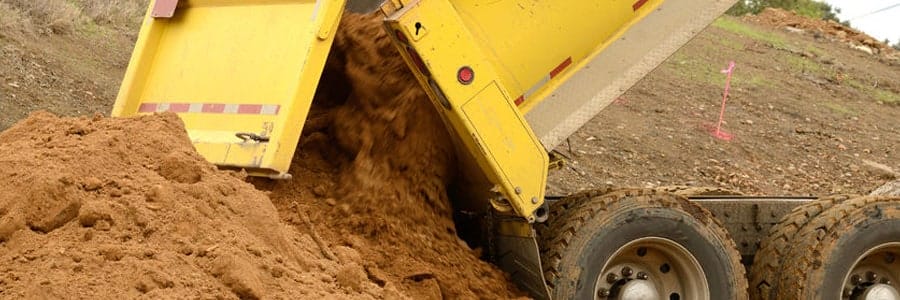
The goal is to limit soil erosion during the site development process. This means limiting soil loss to 2 tonnes per hectare per year or less.
And look for innovation solutions to discharge less than that amount annually. This normally includes sediment controls that are located as close to the source of erosion as practical.
Estimating Potential Soil Loss
Soil loss can be estimated using the Revised Universal Soil Loss Equation for Application in Canada (RUSLEFAC). This is a mathematical equation that can estimate soil loss based on environmental factors specific to the site in question. The equation itself is A = R * K * LS * C * P where each letter is defined by the following.
A: Annual Soil Loss Due to Erosion
R: Erosivity Index to Climate Location
K: Index for Soil Erodibility According to Susceptibility to Erosion
L: Topographic Factors for Length of Overall Flow Direction
S: Topographic Factors for Steepness or Slope of Flow Path Length
C: Cover & Management Factor
P: Support Practices Factor
Calgary uses RUSLEFAC when it reviews ESC Plans. This determines whether the plans are viable in keeping the amount of discharge below annual levels. Keep in mind that the goal is to limit soil erosion to the least amount possible, not just to 2 tonnes per hectare per year.
Given the wide range of environments that construction sites may exist, not all will use the same ESC Plan for the entire run. However, the calculations are still required to each drawing submitted as part of the ESC Plan.
RUSLEFAC is designed to provide estimates rather than absolutes in determining soil loss. This means the formula does not determine when the loss of soil is excessive or when control systems have failed. The ESC designer will account for numerous factors in making their decision. Estimates of soil loss and yield of sediment are just two of many factors.
Limitations of RUSLEFAC
There are other limitations of the formula that need to be accounted. The first is that the component equations are not verified for certain gradient limits and length of slope. Other limitations include the following.
– Does Not Produce Watershed-Scale Yields of Sediment
– Not Appropriate to Input Average Watershed Values for RUSLE Factors
– Limited to Rates of Erosion Caused by Sheet and Rill
– Gully or Channel Erosion Cannot be Determined Using RUSLEFAC
– Based on Average Erosivity Values Caused by a Typical Storm
In other words, an unusually strong storm will cause greater erosion that is not factored into the RUSLEFAC formula.
Proper ESC practices should include the estimated annual soil loss, climate factors, and erodibility of the soil itself. The texture of the soil is also a determining factor as this provides insight into potential erosion. This usually means investigating the soil for the presence of silt, organic matter, and sand grains that are both fine and larger than 0.10mm.
The greater the erodibility of the soil, the more steps will be taken in the ESC Plan to limit the damage to the recommended amounts.
Tag: soil, Sediment, potential, Erosion, Calgary, assessing, annual