You can use vegetation to line constructed or natural channels to prevent erosion from occurring. Vegetation slows down water runoff which means less erosion on the soil. Vegetation works best in low-velocity runoff areas. Grasses are normally used for lining channels, although some woody species such as willows may work as well.
Implementation
The shape of the channel may be trapezoidal, V-shaped, or parabolic depending on what is needed. All vegetated channels must handle a 24 hour, 10-year design storm. The slopes must not exceed 3H:1V to establish the vegetation and allow for maintenance. The design velocity of the runoff in vegetative channels should not exceed 5 ft/sec.
Best times to build a channel is in the late spring or summer since the grasses will grow in the channel. For poor drainage areas, you may need to wait for a dry period. To prevent sediment buildup, sediment traps may need to be constructed. Before such channels are constructed, outlets need to be built to help minimize erosion.
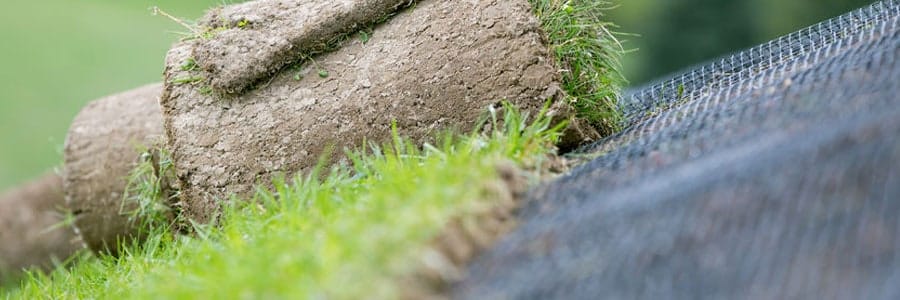
Mats, blankets, or mulch may be used before establishing vegetation for additional stability. Turf reinforcement mats, erosion control blankets, and sod can be used for channels with velocities greater than 0.6 m/sec. For velocities of 1.2 m/sec, turf reinforcement mats and permanent erosion control blankets are recommended.
When the channel is excavated and graded, it must be smoothed, and the soil compacted to prevent unequal settlement. The water surface elevation must be equal or less than the surface elevation of the diversion or tributary channels that contribute to the water flow. Select the appropriate vegetation early in the construction process before grading and paving.
A stabilized outlet must be built before the channel is operational. Keep in mind that native grasses have deep roots and may take several years to fully establish. To meet the criteria of the channel, it must be properly shaped by grading equipment. There should be no irregularities, bank projections, or the like that creates unequal settlement. Stockpile the topsoil and respreads when necessary to create a proper seed bed.
After construction and grading, new topsoil and seed must be applied within 24 hours. Use fertilizer to speed up the growth of grass and sod to protect critical areas along with turf reinforcement mats or mulch.
Inspection & Maintenance
Regular inspection will detect early signs of erosion which will need to be reseeded or sodded. Proper fertilizing and mowing of the grass will keep it in good condition. After the grass is fully established, inspect for build-up of debris or if erosion is taking place. Remove any excess sediment build-up to ensure that the channel remains free-flowing.
Channel
Tag: soil, Erosion, Control, construction, inspection, runoff, ESC, water, blankets, channels, compacted, drainage, fertilizer, grass, grow, natural, seed, stabilized, topsoil, trapezoidal, vegetation, woody