Temporary Diversion Berm: This is a temporary ridge built to divert runoff or store it, so it does not reach exposed slopes or bodies of water.
Continuous Berm: A barrier of sediment encased by a geosynthetic fabric to divert or hold runoff, so the sediment can properly settle. Considered a strong alternative to silt fences since they do not require entrenchment. Helps control erosion and sediment build-up around a construction site.
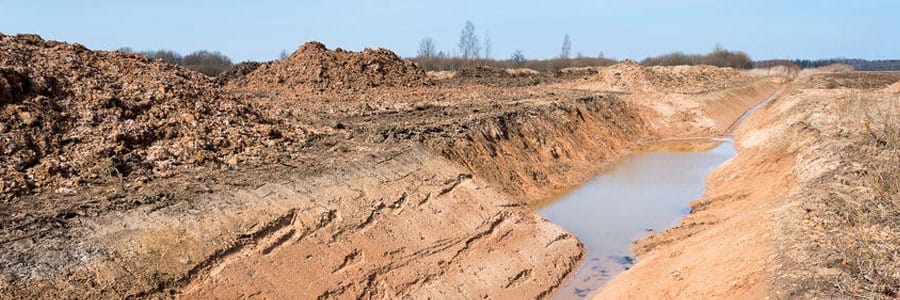
Temporary Diversion Channel: A ditch or swale that channels runoff towards a stabilized area and around sensitive areas.
How It Is Implemented
Temporary Channel: A temporary channel must handle runoff from a 24-month storm event, preventing damage that might be severe to the site. It must be carefully constructed in terms of size, earthen and continuous berms, and drainage channels that must be put into place. Excess erosion and sediment buildup must be prevented by the diversion of water through the temporary channel. Use the proper mix of seed vegetation as per environmental conditions.
Temporary or Permanent Diversion Berm: This is the first step in stripping and grading and must be performed before the land in the upstream catchment area is disturbed. The berms must be made of the right materials, properly compacted, and located to minimize the damage from traffic and construction operations.
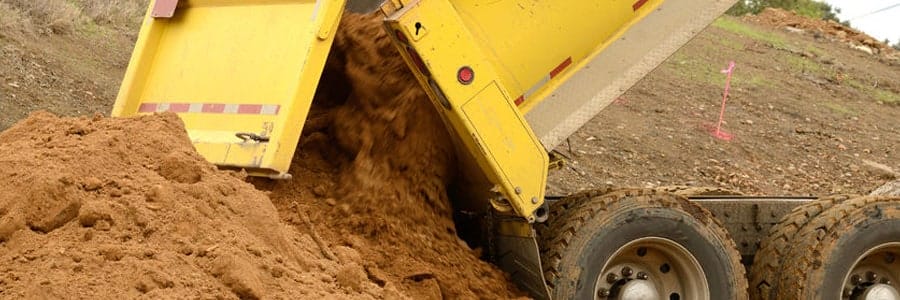
Equipment that can site grade can be used to construct the berm. The catchment area for the berm must not go past 2 ha. The berm is constructed from the bottom up, placing and compacting the soil or suitable material as per the design.
A typical berm is less than .5 meters high with a crest of just under .6 meters. The cohesive or coarse-grain soils used to create the berm must be formed into trapezoidal shapes in the cross-section with side slopes of 2H:1V or flatter. If the fine grain soils are less cohesive, then 3H:1V is acceptable. The containment berms, temporary or permanent diversion must be stabilized following construction to prevent erosion. The materials must be strong enough to resist the expected water shear and flow.
A diversion channel must be included for all berms to ensure proper drainage. This can be done with a positive grade that leads to a stabilized outlet, channel, or sediment basin or trap.
Diversion Channels
Such channels must be constructed using trapezoidal or parabolic cross sections. The side slopes must be 2H:1V or flatter for standard coarse-grain soil. It can be 3H:1V for poorly cohesive fine-grain soil. A stabilized outlet must be constructed first to ensure runoff to a stabilized channel, sediment trap or basin before the diversion channel can be built.
A minimum 2% slope is required for the grade of the final channel to provide positive drainage. To minimize erosion, the channel gradient needs to be as small as possible. If the channel exceeds 2%, better material will be needed to withstand the additional erosive elements such as the following;
– Rolled Erosion Control Blankets – Proper Vegetation – Riprap – Combination of Suitable Materials or Practices
Continuous Berms
These are perimeter control for filtering or trapping sheet runoff. It must not exceed 0.4 ha or 1 acre and contributing slopes are limited to 10 m in their length. Using a continuous berm machine (CBM), geosynthetic material can be wrapped around the soil, sand, or aggregate to create the berm. The berm itself must be two to three meters from the toe of the slop to ensure proper diversion or storage of runoff.
Woven geotextile is recommended. Plus, local suppliers may have biodegradable casing materials for areas in which its required. Material of higher permeability is recommended for draining low-lying areas. By splitting the berm, spreading out the fill material, and taking away the fabric, the berm can be safely removed.
Inspection & Maintenance
Inspections are recommended at least every two weeks except when frozen. After rainfall, snowmelt, or impact, the measures must be inspected, and repairs made if necessary. Before a freeze-up, ensure all temporary channels and berms are properly stabilized for snowmelt.
Berms that trap sediments must be inspected and cleaned after every significant rain event or when needed. All damage caused by traffic or other activities must be repaired by the end of that day. If vegetation does not take hold, reseed the area.
Tag: rainfall, construction, erosion control, Sediment Control, BMP’s, berms, continuous berms, diversion channels, riprap, rolled erosion control blankts, snowmelt, temporary channel, temporary division berm