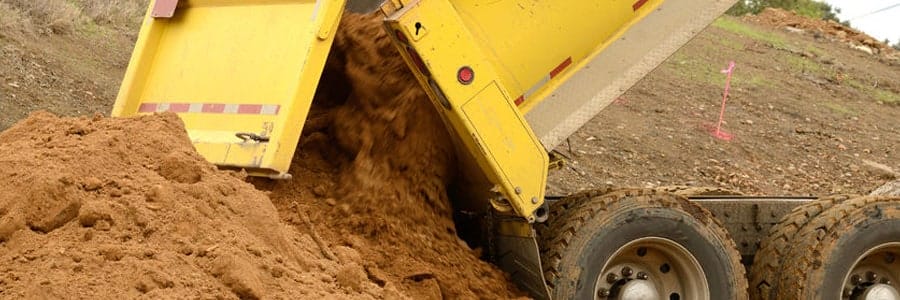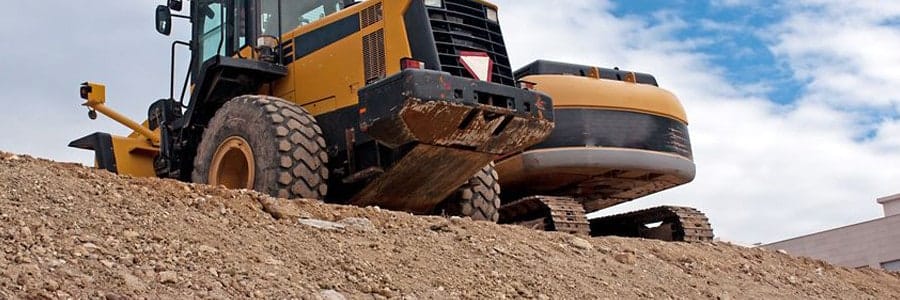
The grading and roughening of surfaces by creating grooves, furrows, benches, or tracks in the soil helps to redirect waterflow and reduce the movement of sheet run-off on otherwise exposed areas. The same is true for texturing a slope which may reduce erosion during times of precipitation or strong winds. Such measures which include creating grooves, furrows, or tracks that are perpendicular to prevailing winds can help to reduce soil detachment and creep or saltation which in turn preserves the existing land.
Roughening & Furrowing: You’ll want to leave the exposed soil in a roughened or furrowed state and not try to smooth it out. The first step is to determine the prevailing winds and roughen the soil perpendicular to that direction. You can use the ripper teeth on a grader to accomplish the task. The depth should be set from 0.15 to 0.30 meters. For furrowing slopes, be sure that the furrows you create are perpendicular to the fall of the slope itself.
Tracking: Sometimes called track-walking or cat-tracking, this is the act of leaving depressions in the slope perpendicular to its direction. You should not track if the soil is claying or too wet. By tracking, the result will be to reduce the velocities of the run-off, increase seeding development along with infiltration of water, and to trap sediment in place. To avoid too much compaction, limit the tracking to one or two passes at most.
You’ll want to seed the soil as soon as the tracking is completed, so that new grass can grow quickly. Proper germination of the seeds will ensure minimal time the soil is exposed to the elements.
Benching or Terracing: Ancient cultures used this method to grow crops on the sides of steep slopes. It is the creation of flat sections of terrain that is perpendicular to the direction of the slope. The stability of the slope is key, so a qualified geotechnical engineer should do regular inspections. The grade should be gentile and rise as it reaches the slope itself for proper drainage.
Keep in mind that benches increase the gradient of the slope in their locations, so without proper drainage it may have a negative effect on the area. The formations of gullies and ponds is an indication of improper benching, but it is the instability of the slope itself which may cause greater damage.
Inspections & Maintenance
It is recommended that you inspect the area at least once per week and within 24 hours of a rainfall or rapid melting of snow. This includes light rainfall on areas where the soil is already saturated. By conducting frequent inspections, you can spot small issues before they become major problems.
Plus, any areas that have been damaged by erosion should be re-graded and then re-seeded to correct the problem. By conduction proper inspections, you can ensure that the grading, roughening, or texturing of the soil is maintained.
Tag: erosion control, Sediment Control, BMP’s, construction scheduling, roughening, slop texturing, surface grading