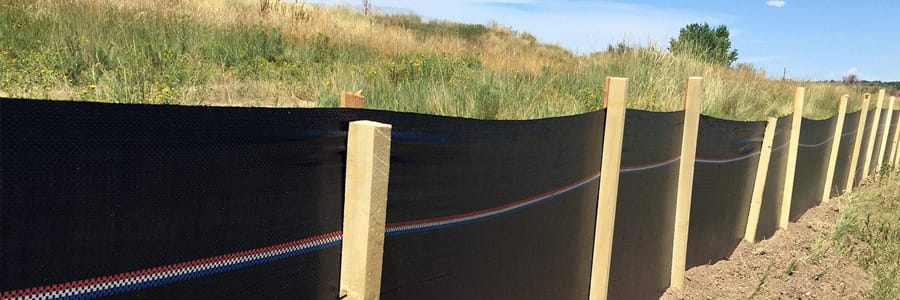
A silt fence needs to be installed on a contour to control sediments that may be carried away by run-off due to a rain or other event. When placed on a contour, they need to be shaped into a j-hook or “smile” configuration for maximum effect. This means that before construction begins the area must be inspected to identify contours were silt fences should be installed.
Installation
The silt fence needs to be properly installed and follow city guidelines. This includes installation that is the proper length, in the right position, and with the posts spaced appropriately. The fence must also be adequately entrenched to ensure that it stays in place and catches the sediment as it runs into the fence.
As part of the installation process, the right amount of wire backing needs to be used. Too much can be detrimental to the integrity of the silt fence. In addition, the installation of the silt fence needs to include the following.
– Create Adequate Safe Storage Volume for the Water
– Install in a Compacted Trench or Sliced
– Post must be Well Stakes and Closely Spaced
In addition, the fence must be regularly inspected and any damaged areas must be repaired or replaced.
Avoid Steel Slopes
The purpose of a silt fence is to pond water in a safe manner. Unless the purpose is to divert the water to another location. This means that silt fences must not be constructed on steep slopes or areas where a concentrated flow of water will occur. Otherwise, the integrity of the silt fence may be compromised when an excessive flow of water strikes.
Alternatives
If a silt fence is not the best solution, there are alternatives available. Such alternatives include compost socks, berms, and straw wattles. The area should be inspected and assessed to see whether a silt fence or an alternative is best for erosion control.
Removal
Once the area has been stabilized, then the fence may be removed. This assumes that no further construction takes place or that the area itself is no longer subject to erosion.
Tag: Sediment, Calgary, alberta, erosion control, esc plan, BMP, silt fence