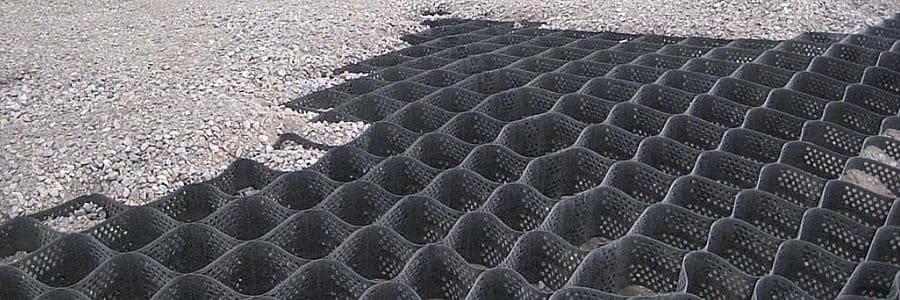
Known as CCS, cellular confinement systems are honeycomb structures that retain soil. They are used to mechanically stabilize fill soils to provide protection for slopes and channels along with load support and soil retention. They are crafted from expandable panels to create a system of cells that confines topsoil while protecting the roots while allowing water to seep inside. They are a permanent measure to control erosion and are usually placed along steep slopes.
Implementation
Riprap is best used after grading and before a significant precipitation event can occur. It is best to schedule the placement of riprap immediately after the soil has been graded if possible.
– Grade the slope to the proper grade and elevation
– Remove all rocks and debris from the location of where the matting will be placed
– Excavate the area so the CCS is flush or just lower than the final grade or adjacent terrain
– Install CCS according to manufacturer’s directions
– Place matting longitudinal to the direction of the expected flow or downslope
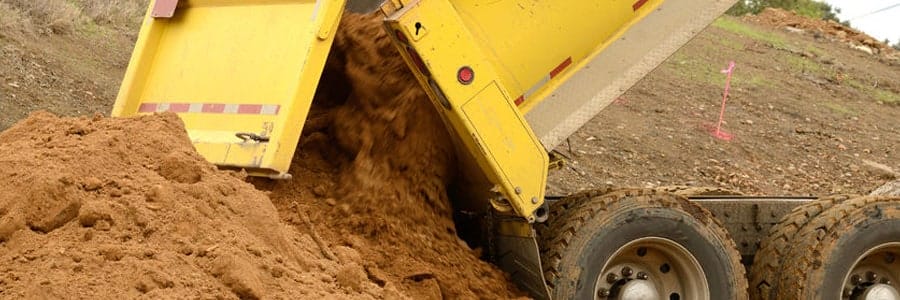
– Put fill material in expanded cells. Use proper equipment such as back-hoe, conveyer, or front-end loader
– Start infiling process at top of slope to avoid deformation of CCS
Inspection & Maintenance
Areas with CCS installed should be regularly inspected, particularly after heavy precipitation. That inspection process may end when a vigorous vegetation cover is placed and established. Check for any damage, loss of material, or other erosion in the CCS system and repair or replace as necessary.
Tag: soil, erosion control, Sediment Control, riprap, BMP, cellular confinement systems, honeycomb structures, stabilize