Work is changing fast. The people doing it should not be the part that breaks.
We help mission-led organizations and smaller businesses in Calgary diagnose where their teams are breaking under the weight of new AI tooling, and design the operational fixes their leadership can actually run.

Help mission-led organizations and smaller businesses respond to the pressure AI is putting on their teams, with practical diagnostics, applied research, and the redesign plans their leadership can actually run.
AI is being rolled out faster than most workplaces can absorb, and the part of the operation that bends first is usually the people doing the work.
Boards and vendors frame AI as a productivity story. Sit down with the managers running the work and a different picture shows up. Participation rates moving. Cohesion fraying along predictable seams. Mental-health caseloads climbing two and three quarters after a rollout. The institutions meant to respond are running on the same fumes.
Mission-led organizations and smaller businesses absorb most of the downstream cost. We exist to hand them the diagnostic and the redesign plan before strain hardens into a crisis the board has to disclose.
More than 840,000 people die every year from psychosocial risks at work, the ILO confirmed in its 2026 update. Cardiovascular disease and mental-health collapse account for most of it.
Global engagement sat at 20% when Gallup ran the 2026 Q1 numbers. The 80% who aren't engaged cost the economy ten trillion dollars a year.
Canada loses $180 billion a year to mental-health strain, CSA Group's longitudinal data shows. Employers carry $110 billion of it directly through productivity loss, disability claims, and accommodations.
Sixty-nine percent of the US and Canadian workforce is disengaged or unaligned from their employer's mission. North America used to lead globally on this metric. As of Gallup's 2026 Q1 report, it lags.
Four convictions that shape how the diagnostics get designed, who we partner with, and what we agree to take on.
Public benefit, anchored in service
Regenera operates as a Social Enterprise so the work pays its own way without trading off the people it's meant to help. The governance lines up with the organizations we serve, and operating documents publish with the first annual report in late 2026.
Human capacity cracks first
Most teams we walk into are running their managers harder than their tech stack. Gallup's 2026 Q1 numbers put US and Canada disengagement at 69%. We focus on the operational practices that produce that strain: workload distribution, decision latency, meetings that should have been a doc.
AI governance you can actually run
Most AI-policy documents read like vendor templates. They get filed and forgotten. We build operational habits that catch issues: audit trails on AI-assisted decisions, scoped access by role, a clear escalation path when something goes sideways. Boring on paper. Saves the next 60 Minutes segment about a policy nobody read.
Catch it before crisis
When an organization comes mid-crisis, cleanup runs four to six times what early intervention would have cost. The signals are there if you know where to look: oversight gaps nobody owns, decision risks hiding in meeting minutes, workload patterns that look fine on a spreadsheet but produce next quarter's burnout.
Five commitments shaping what we build and how we build it.
These shape how we design diagnostics, who we work with, and what we agree to take on. Look, we know plenty of organizations have values pinned to a wall nobody reads. Ours get tested against the work and updated when reality pushes back. We’ve already revised one twice this year.
Human dignity
Work should let people think clearly, contribute their best, learn from mistakes, recover from hard quarters, and use judgment when policy runs out.
Courageous responsibility
Naming a risk early is often the hardest part of fixing it. We say what we see in the diagnostic reports even when the finding lands on the executive who hired us.
Evidence over doctrine
Frameworks get tested in the field, refined when reality pushes back, and documented openly. We've already updated the CLARA scoring rubric twice this year because the first version missed two things in the Calgary pilots.
Practical regeneration
Every intervention has to make real work measurably better within a quarter. No complexity for its own sake, and no buzzwords passed off as analysis.
Cross-sector by default
We run cohorts that mix mission-led leaders, SME owners, OD practitioners, and the occasional skeptical researcher. Nobody fixes workforce health alone, and the cohort design has been the single biggest reason early findings hold up across the Calgary pilots.
Four practical forms of the CLARA methodology.
Every engagement runs over four to six weeks. We diagnose, present the findings, and hand off a redesign plan your team can implement. Anything new gets pilot-tested and reviewed before it ships.
CLARA Starter Scan
A 45-minute diagnostic that pulls out the early signals: where strain is building on your people, where roles are quietly drifting, where the AI rollout has outpaced governance. Most leaders walk away with two or three concrete moves to make next week.
CLARA Organizational Diagnostic
The full assessment, run over four to six weeks. We look at workload, oversight, decision flow, learning pathways, and AI-interface risk. You get an Organizational Friction Map plus a 90-day redesign plan you can actually run.
Regenerative Workplace Assessment
A structured review of how work runs in practice. Role design, governance, workload, technology use. The output moves you from treating symptoms to redesigning the system that produces them.
State Of Regenerative Work
An anonymized annual report drawn from the engagements. Patterns we see across organizations, with the caveats and limits called out where the data is thin. Free for partner organizations, policy leads, and anyone working on the same problems.
of the US and Canadian workforce is disengaged or unaligned from their employer right now.
SOURCE: GALLUP Q1 2026
Four audiences, each entering through a different door.
We built this around the people closest to the actual work. Diagnostics, training pathways, and ongoing advisory all map to one of these entry points.
Mission-led organizations
Trigger: Leadership burnout the board can see but nobody has named. Service pressure outrunning capacity. AI questions no vendor gives you a clean answer on. Turnover you cannot explain to the next hire.
SMEs and Social Enterprises
Trigger: You want to adopt AI without losing the people who keep the lights on, or the oversight habits that keep you out of trouble with regulators and insurers.
HR, OD practitioners, and coaches
Trigger: You need credible tools for AI-era work, and most of what's currently being sold to your clients lands somewhere between vapor and theatre.
Policy, academic, and AI governance partners
Trigger: You need applied data on what AI is actually doing to people inside organizations, not another think-piece about what it might do five years from now.
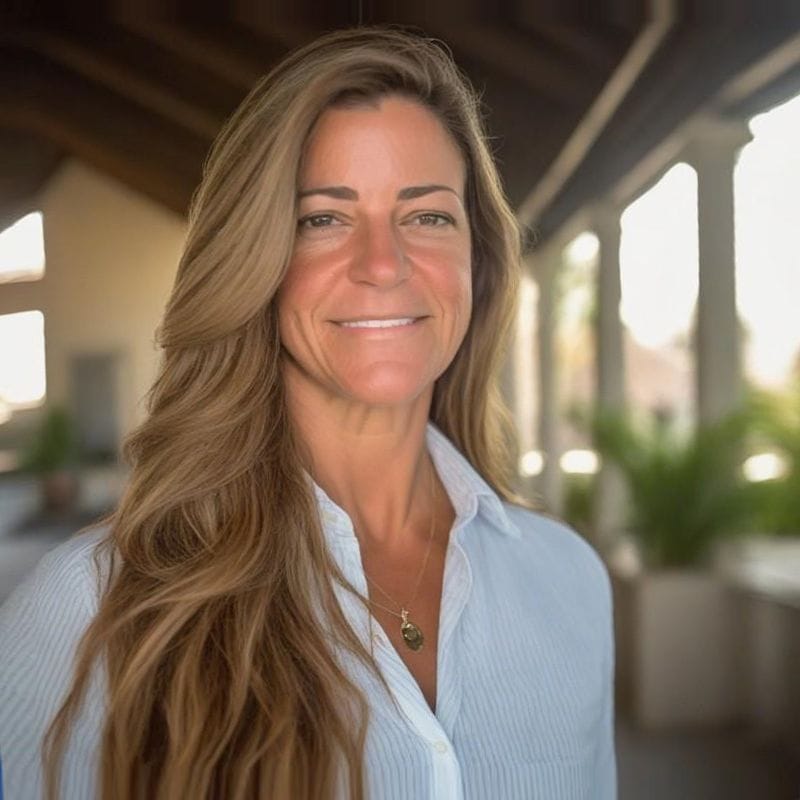
Tatiana Vargas
Tatiana has spent twenty-five years working the seam where people, organizations, and strategy meet, covering People and Culture leadership, workforce strategy, organizational effectiveness, HR redesign, leadership advisory work, and operational scaling across multiple sectors.
The sector mix matters: nonprofit, SaaS, energy, ESG, consulting. Through Year 1 of Regenera she carries most of the operational weight, including the methodology work, pilot delivery, client relationships, partner conversations, board coordination, and partnership development.
“Healthy organizations come from healthy human systems. The work is catching the strain early, before it shows up in turnover or disability claims, and then designing the operating conditions that let people think clearly, contribute their best work, and recover when they need to.”
Three ways in. One shared mission.
Organizations running diagnostics. Leaders exploring the work. Practitioners building the infrastructure. Anchored in Canada and shaped by what actually happens inside the work.
Let’s build the foundation together.
Whichever door you’re walking through here, organization running a diagnostic, leader exploring the work, or practitioner pathway, tell us a bit about your organization and what brought you to this page. We reply inside two business days. Most weeks we reply faster.